Everyone visits Athens in summer. The Acropolis is packed, the marble is scorching, restaurant lines stretch down the street, and the heat is the kind that makes you reconsider your life choices around 2 PM.
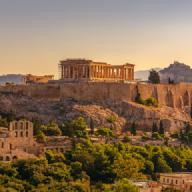
Then there’s winter Athens. The Acropolis at 8 AM with a small fraction of the summer crowd. Crisp air and a low sun that turns the Parthenon gold in the afternoon. Museums you can walk through without being bumped every ten seconds. Hotel rates far below what you’d pay in July.
Here’s why winter in Athens deserves more credit than it gets.
This article contains affiliate links. When you book through our links, we earn a small commission at no extra cost to you. This helps us keep creating free, honest Athens travel content. See our disclosure page for details.
Quick Overview: Athens Winter Weather#
| Month | Avg High | Avg Low | Rain Days | Sunshine (hours/day) |
|---|---|---|---|---|
| December | 14°C (58°F) | 9°C (48°F) | ~13 | ~4 |
| January | 13°C (56°F) | 7°C (45°F) | ~13 | ~4 |
| February | 14°C (58°F) | 7°C (45°F) | ~11 | ~5 |
Temperatures are downtown Athens 1991-2020 averages; rain days and sunshine are from the Elliniko station (climate tables).
The reality: Athens winter is nothing like a northern European or North American winter. Daytime temperatures sit around 13-14°C, and snow in the city is rare: most winters you only see it on the mountains around Athens. It still happens every few years, though, and in February 2021 and January 2022 it covered the whole city. Rain falls on about three days a week, often in short showers rather than all-day downpours. Many days are sunny and mild enough for sightseeing in a light jacket.
Think London autumn weather, but with more sunshine and significantly better food.
Why Visit Athens in Winter#
1. The Crowds Disappear#
This is the biggest advantage. In peak summer the Acropolis takes up to 20,000 visitors a day, the official daily cap. In January the numbers are a small fraction of that. You can stand in front of the Parthenon, take a photo without strangers in it, and look properly without being elbowed.
Same goes for museums, restaurants, and neighborhoods. Everything that feels rushed and crowded in summer becomes calm.
2. Prices Drop#
| Expense | Summer | Winter |
|---|---|---|
| Mid-range hotel | Peak rates, books up early | Usually far lower (except the New Year week) |
| Flights to Athens | Peak fares | Often cheaper, though some routes run less often |
| Tours | Same price, popular slots sell out | Same price, rarely sells out |
The easiest way to see the difference is to search the same hotel for a night in July and a night in January: the winter rate is usually much lower. Flights from most European cities are cheaper too.
3. The Light#
Winter sunlight in Athens is low and golden. In the January afternoon light the Parthenon looks like a different monument from the one bleached white by the August noon sun. Shadows are longer and colors are warmer, which photographers love.
4. It’s Still Mild#
You’re not braving blizzards. Most winter days reach 13-14°C, often with sunshine: too cool for swimming in the sea, but right for walking, sightseeing, and eating outside at lunch (outdoor dining happens year-round in Athens, with blankets and heaters at many tavernas).
Best Things to Do in Athens in Winter#
Outdoor Activities (Yes, Really)#
Walk the Acropolis in Peace#
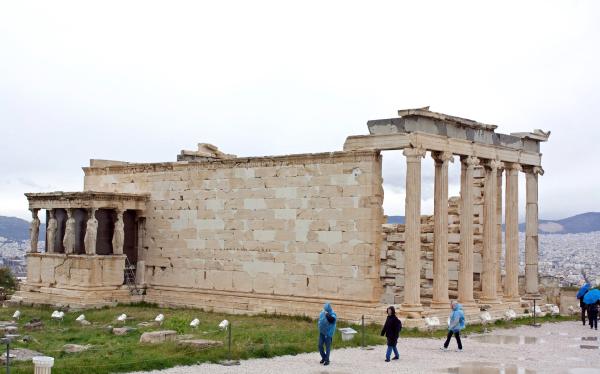
This is winter’s greatest gift. A site that can take up to 20,000 visitors a day in summer becomes peaceful. You can take your time, read the information panels, stand quietly in front of the Erechtheion, and feel the history instead of fighting through a crowd for a glimpse.
Winter hours: 8 AM to 5 PM, last entry 4:30 PM (in summer the site stays open until 8 PM) Best timing: Midday on a sunny day, when it’s warmest and the light is clear
Acropolis Small-Group Guided Tour
Guided entry with an expert guide. In winter, small groups get even smaller, and the guide’s stories are easier to hear without summer crowd noise.
Also on Viator: Book an Acropolis tour on Viator →
Explore Neighborhoods Without the Heat#
Walking through Plaka, Monastiraki, Anafiotika, and Psyrri in winter is a different experience. The streets aren’t packed, the light in the narrow alleys is soft, and you can wander for hours without needing to find shade or water every 20 minutes.
Best winter walks:
- Plaka to Anafiotika: The little whitewashed village under the Acropolis, at its prettiest in low winter light
- Filopappou Hill: A quiet walk through pine trees with Acropolis views
- Kerameikos to Thissio: The ancient cemetery and the pedestrian walkway, usually empty in winter
Hike Mount Lycabettus#
The highest point in central Athens, with 360° views that on a clear winter day reach the sea and the snow-capped mountains beyond. You can take the funicular up (about €10 one way or €13 return in November 2026; check the board at the lower station on Aristippou Street) or hike the pine-shaded path. In winter the climb is pleasant rather than sweaty.
Best time: Clear mornings for the sharpest views What to bring: A jacket for the breeze at the top
Museums (Winter’s Perfect Activity)#
Winter is museum season. When it’s drizzling outside and the ancient sites close at 5 PM, Athens’ museums become the main event.
The Essentials#
- Acropolis Museum: Good in any season. The natural light changes through the glass walls, giving the Parthenon gallery a different feel in winter.
- National Archaeological Museum: Give it the 3+ hours it deserves without feeling guilty about missing good weather. The Mask of Agamemnon, the Antikythera Mechanism and the bronze god from Artemision (Zeus or Poseidon) are worth the trip alone.
- Benaki Museum (main building on Koumbari Street): open late on Thursdays, and Thursday evenings have offered free entry to the permanent collection, but check benaki.org before you plan around it. The rooftop cafe has winter views.
Less Famous But Excellent#
- Museum of Cycladic Art: 5,000-year-old figurines that look modern. A good rainy afternoon.
- Byzantine and Christian Museum: Golden icons and centuries of religious art in a quiet setting.
- National Gallery: Reopened in 2021 after a major expansion, with Greek art from El Greco to the present.
For a complete guide, see our best museums in Athens, and for more wet-weather ideas, our rainy day in Athens guide.
Food & Drink Experiences#
Winter Food Tour#
Athens’ food scene doesn’t hibernate. In winter it shifts toward the warm, hearty dishes Greeks actually eat at home, and that’s when food tours are at their best.
Athens: Ultimate Food Walking Tour with 15 Tastings
A small-group walk through the old town with a food-obsessed guide and the history of Greek cooking along the way. You taste more than 15 foods, mostly in places away from the main tourist streets.
Also on Viator: Book a food tour on Viator →
Winter Greek Food to Try#
Greek winter cooking is comfort food:
- Avgolemono: Egg-lemon soup, warming and tangy, on most taverna menus in winter
- Pastitsio: Baked pasta with meat sauce and béchamel (Greek lasagna, more or less)
- Stifado: Beef or rabbit slow-cooked with small onions, red wine, and spices
- Giouvetsi: Lamb or beef baked with orzo pasta in tomato sauce
- Bougatsa: Warm custard-filled phyllo from bakeries (the cold-morning breakfast)
- Salepi: Hot orchid-root drink sold by street vendors, Greece’s answer to hot chocolate
- Rakomelo: Warm raki with honey and spices, served at tavernas and bars
Athens Central Market in Winter#
The Central Market (Varvakios Agora) is busy year-round, but winter suits it. Steam rises from the soup joints inside, the stalls fill with seasonal produce (citrus, pomegranates, wild greens), and with fewer tourists you can take your time and talk to the vendors.
See our Greek food guide for more.
December-Specific: Christmas in Athens#
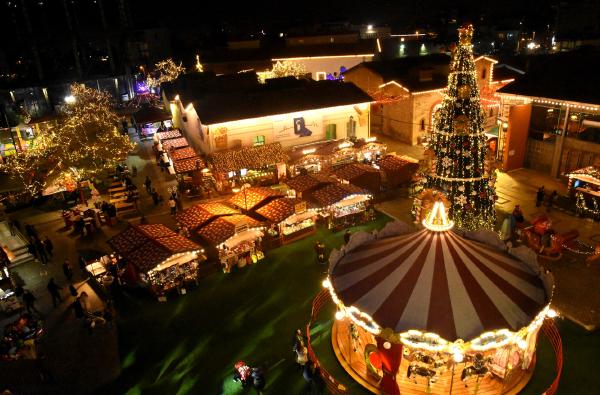
Athens at Christmas surprises most visitors. The city decorates well, and Greek Christmas traditions are worth seeing.
Christmas highlights:
- Syntagma Square Christmas Tree: Athens’ main tree, a 21-meter fir in 2026, lit on Tuesday, November 24 at 7:30 PM and surrounded by events through the season
- Christmas markets: The City of Athens’ market at Kotzia Square (December 20 to January 6 in 2025; 2026 dates not yet announced), plus stalls and kids’ activities around the Syntagma tree
- Christmas Factory at Technopolis (Gazi): A family Christmas village with workshops, rides and live music, open November 21, 2026 to January 6, 2027
- New Year’s Eve: A free concert and countdown in Syntagma Square, with fireworks and a drone show at midnight. The metro stops early that night (by 11 PM in 2025), so stay central. Tavernas stay open until very late
- January 6 (Epiphany): Priests throw a cross into the sea at Piraeus, and swimmers dive in to retrieve it. Wild to watch, freezing to take part in.
Greek Christmas Food#
- Melomakarona: Honey-drenched walnut cookies (addictive)
- Kourabiedes: Almond shortbread dusted in powdered sugar
- Christopsomo: Christmas bread
- Vasilopita: New Year’s cake with a coin hidden inside (find the coin, get good luck for the year)
Full details on markets, dates, opening hours and festive tours in our Christmas in Athens guide.
Late February and March: Carnival Season (Apokries)#
Apokries, the Greek Carnival, fills the three weeks before Lent. Its dates follow Orthodox Easter, so they move every year: in 2027 Clean Monday falls on March 15, which puts the main Carnival weeks in late February and early March. Athens’ celebrations are smaller than Venice’s (Greece’s big parade is in Patras), but the city gets into the mood.
Carnival highlights:
- Costumed crowds in Plaka and the city center, and costume parties at bars and clubs
- Tsiknopempti (“Smoky Thursday”, March 4 in 2027), when tavernas and homes across the city grill meat
- Clean Monday (March 15 in 2027), the start of Lent, when Athenians fly kites on Filopappou Hill and eat lagana bread and seafood
What to Wear in Winter Athens#
Athens winter isn’t arctic, but you need to dress for it:
- Layers: mornings can be 7-9°C and afternoons 14°C
- A warm jacket: not ski-level, but a proper jacket, not just a hoodie
- Waterproof walking shoes: cobblestones + rain = slippery. Good grip matters.
- An umbrella or rain jacket: it rains on about three days a week
- Scarf and light gloves: for windy days and early mornings
- Sunglasses: winter sun is low and bright in Athens
For a full packing list, see our what to pack for Athens guide.
Practical Winter Tips#
Check opening hours. Archaeological sites switch to winter hours from November to March (the Acropolis is open 8 AM to 5 PM instead of 8 AM to 8 PM). Some smaller museums close one day a week, often Monday or Tuesday.
Day trip timing changes. Sunset is between about 5:05 PM (early December) and 5:45 PM (late January). Cape Sounion sunset tours leave earlier, and some tours run less often.
Free Sunday visits. The first and third Sunday of every month from November to March mean free entry to state museums and archaeological sites, including the Acropolis (but not the Acropolis Museum). This is the best deal in Athens sightseeing.
Book less in advance. Outside Christmas and New Year, you rarely need advance bookings for tours, museums, or restaurants, and walk-in availability is good almost everywhere.
Enjoy taverna culture. Winter is when Athenians settle into long, slow meals, ordering rounds of meze, drinking wine, staying for hours. Join them. Nobody is rushing you.
Rain comes in bursts. Showers are often short. Carry an umbrella, find a cafe, wait it out, and the city looks freshly washed afterwards.
Heating varies. Older budget hotels may have weak heating. Check reviews that mention winter stays. Modern hotels and apartments are fine.
Sample 3-Day Winter Itinerary#
Day 1: Ancient Athens#
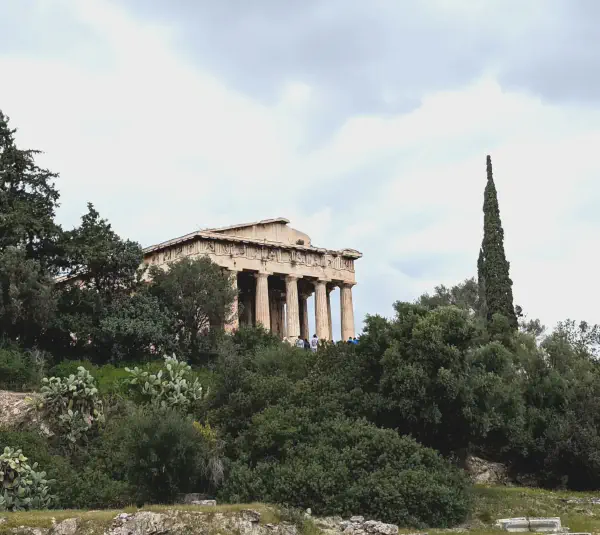
Morning: Acropolis (smaller crowds, low winter light) Midday: Acropolis Museum (warm, well-lit) Lunch: Hot avgolemono soup and grilled meat in Plaka Afternoon: Ancient Agora → Thissio walk Evening: Rooftop drinks (many stay open year-round with heaters) → dinner in Psyrri
Day 2: Culture & Food#
Morning: National Archaeological Museum (give it 3 hours, you have time) Lunch: Central Market and a bowl of soup at one of the market’s eateries Afternoon: Museum of Cycladic Art, or the Benaki Museum (on a Thursday, stay into the evening) Evening: Food tour through Monastiraki and Psyrri
Day 3: Neighborhoods & Relaxation#
Morning: Walk through Exarchia and street art hunting Midday: Coffee and pastries in Koukaki or Pangrati Afternoon: Lycabettus Hill (funicular up, walk down) or Vouliagmeni Lake (spring-fed swimming at roughly 22°C in winter; walk-in only, check the lake’s website for hours) Evening: Traditional taverna for winter Greek food: stifado, pastitsio, wine
Frequently Asked Questions#
Is Athens worth visiting in winter?#
Yes. You get the Acropolis and the major museums with a fraction of the summer crowds, hotel rates well below July and August (except over New Year), and mild weather by northern European standards, with daytime highs of 13-14°C. You trade beach weather for a calmer, more local Athens.
What is the weather like in Athens in December, January, and February?#
Mild by northern European standards. Average highs in central Athens are 13-14°C and lows 7-9°C, with rain on 11-13 days a month and around 4-5 hours of sunshine a day. Sunny days mix with grey ones. Snow is rare, but every few years a cold snap covers the whole city, as in February 2021 and January 2022.
Is the Acropolis open in winter?#
Yes, the Acropolis is open all year except December 25, December 26, January 1 and a few other holidays. Winter hours (November to March) are 8 AM to 5 PM, with last entry at 4:30 PM. The ticket costs €30 all year, because the old winter half-price discount ended in 2025. Entry is free on the first and third Sunday of each month from November to March.
What are the best things to do in Athens in winter?#
The National Archaeological Museum and the Acropolis Museum are at their best in winter, when you can stop in front of a piece without being jostled. The ancient sites (Acropolis, Ancient Agora, Kerameikos) are far less crowded. Cafes, tavernas and bars stay busy all year, because Athenians go out whatever the season. In December the city adds Christmas lights and markets, and Carnival arrives in late February or March.
Is Athens cheaper in winter?#
Yes, mainly for hotels and flights. Hotel rates in December (outside the New Year week), January and February are usually far below July and August, and winter flights are often cheaper too. Restaurant, museum and tour prices are the same all year, but tours rarely sell out, so you can book late.
Does it snow in Athens?#
Rarely, and it usually melts within a day. Every few years a cold snap brings snow to the whole city, as in February 2021 and January 2022, but most winters you only see snow on the mountains around Athens. Pack for rain, not snow.
Is 3 days enough for Athens in winter?#
Yes. Without the summer heat forcing a midday break, and with shorter queues, three days cover the major sites, museums, neighborhoods and food. The one limit is daylight: sites close at 5 PM, so start early.
Are outdoor restaurants open in winter?#
Many are, with heaters and blankets. Greeks eat outside whenever the weather allows, and Athens gets enough mild, sunny winter days that an outdoor lunch is common even in January.
Can you swim in Athens in winter?#
The sea is too cold for most people (about 14-16°C). Vouliagmeni Lake, south of the city, is fed by underground springs and stays at roughly 22-24°C all year, toward the lower end in winter. In winter swimming there is walk-in only, and the official site listed hours of 8:30 AM to 4:30 PM in November 2026.
What about day trips in winter?#
Delphi and the Peloponnese (Mycenae, Epidaurus, Nafplio) work well in winter, with few other visitors. The Saronic Islands have reduced ferry schedules and some restaurants close, but Aegina and Hydra are still reachable. Meteora sometimes gets snow, which makes it even more dramatic, but check the road conditions before you go.
The Bottom Line#
Winter is Athens’ most underrated season. The same Acropolis that has you fighting through crowds in August is quiet in January. The same museums that feel rushed in summer become leisurely. The food shifts to stews and soups that most visitors never taste, and hotel rates and flights drop well below summer levels.
You trade beach weather for something different: a calmer, more affordable, more local Athens. If you’re coming for history, food and culture, which is most of what Athens is about, winter might be the better season to visit.
Planning your trip? See our best time to visit guide, Athens in autumn, 3-day itinerary, and Athens on a budget.